




Understanding Medicare Coverage in Wisconsin: What’s Included and What’s Not
If you’re new to Medicare, one of the first questions you’ll ask is simple: “What does
Medicare cover?” The honest answer is: Medicare covers many medically necessary
services, but it does not cover everything—and some services come with cost-sharing,
limits, or specific rules.
This pillar guide is designed for Wisconsin residents (including English-speaking and
Hmong communities) who want a clear, educational overview of Medicare coverage.
We’ll break down the four parts of Medicare, explain common “gaps,” and share
practical examples so you can feel more confident when planning for healthcare costs.
Note: This content is educational and does not recommend any plan or carrier.
Medicare Basics: The 4 “Parts” and What They Mean

Medicare is a federal health insurance program primarily for people age 65+ and some
individuals under 65 with certain disabilities. Medicare coverage is commonly described
in “parts.”
Part A (Hospital Insurance)
Part A generally relates to inpatient care and certain facility-based services.
Part B (Medical Insurance)
Part B generally relates to outpatient and medically necessary services.
Part C (Medicare Advantage)
Part C is an alternative way to receive Part A and Part B coverage through a private
plan that must follow Medicare rules.
Part D (Prescription Drug Coverage)
Part D helps cover outpatient prescription drugs through private plans that follow
Medicare rules.
What Medicare Part A Generally Covers
Part A is often described as “hospital coverage,” but it can include more than just a
hospital stay.
Inpatient hospital care (when medically necessary)
Part A may help cover inpatient hospital services when you are formally admitted.
Skilled nursing facility (SNF) care (limited situations)
Part A may help cover skilled nursing facility care after a qualifying inpatient hospital
stay, when criteria are met.
Hospice care
Part A may help cover hospice services for eligible individuals who meet Medicare’s
requirements.
Home health services (limited)
In some cases, Part A may cover certain home health services, often alongside Part B
rules.
Important Part A limits to understand
Even when Part A covers a service, cost-sharing and rules may apply. Examples include:
– Deductibles and coinsurance may apply depending on the situation. – Coverage may
be time-limited for certain facility care. – Medical necessity and documentation matter.
What Medicare Part B Generally Covers
Part B is often where people see the widest range of covered services.
Doctor and specialist visits
Part B may help cover medically necessary visits with physicians and certain specialists.
Outpatient care and services
This can include outpatient hospital services, observation services, and certain
procedures.
Preventive services
Medicare covers many preventive services, which may include screenings and
wellness-related visits, depending on eligibility and frequency rules.
Durable medical equipment (DME)
Part B may help cover items like walkers, wheelchairs, or oxygen equipment when
medically necessary and requirements are met.
Lab tests, imaging, and diagnostic services
Part B may cover many diagnostic tests ordered by a provider.
Mental health services
Part B may cover certain outpatient mental health services.
Important Part B limits to understand
– Some services require medical necessity.
– Certain services may require prior authorization or specific documentation
(depending on Medicare rules and setting).
– Cost-sharing may apply (for example, coinsurance).
What Medicare Part D Generally Covers (Prescription Drugs)
Part D is designed to help with outpatient prescription medications.
Formularies and tiers (general concept)
Part D plans use a list of covered drugs (a formulary). Drugs may be organized into tiers
that can affect cost-sharing.
Pharmacy networks (general concept)
Plans may have preferred pharmacies or networks.
Coverage stages (general concept)
Part D costs can change during the year based on total drug spending and plan design.
What Part D typically does not cover
Some categories of drugs may be excluded by Medicare rules, and coverage can vary
by plan.
What Medicare Advantage (Part C) Covers—In General
Medicare Advantage plans must cover everything Original Medicare covers (Part A and
Part B), but how you access care can differ.
Network and service area considerations
Many Medicare Advantage plans use provider networks and have service areas.
Extra benefits (varies by plan)
Some plans may offer additional benefits not covered by Original Medicare. Availability
and rules vary.
Referrals and prior authorization (may apply)
Some plans may require referrals or prior authorization for certain services.
Educational note: This article does not compare plan benefits or recommend a plan.
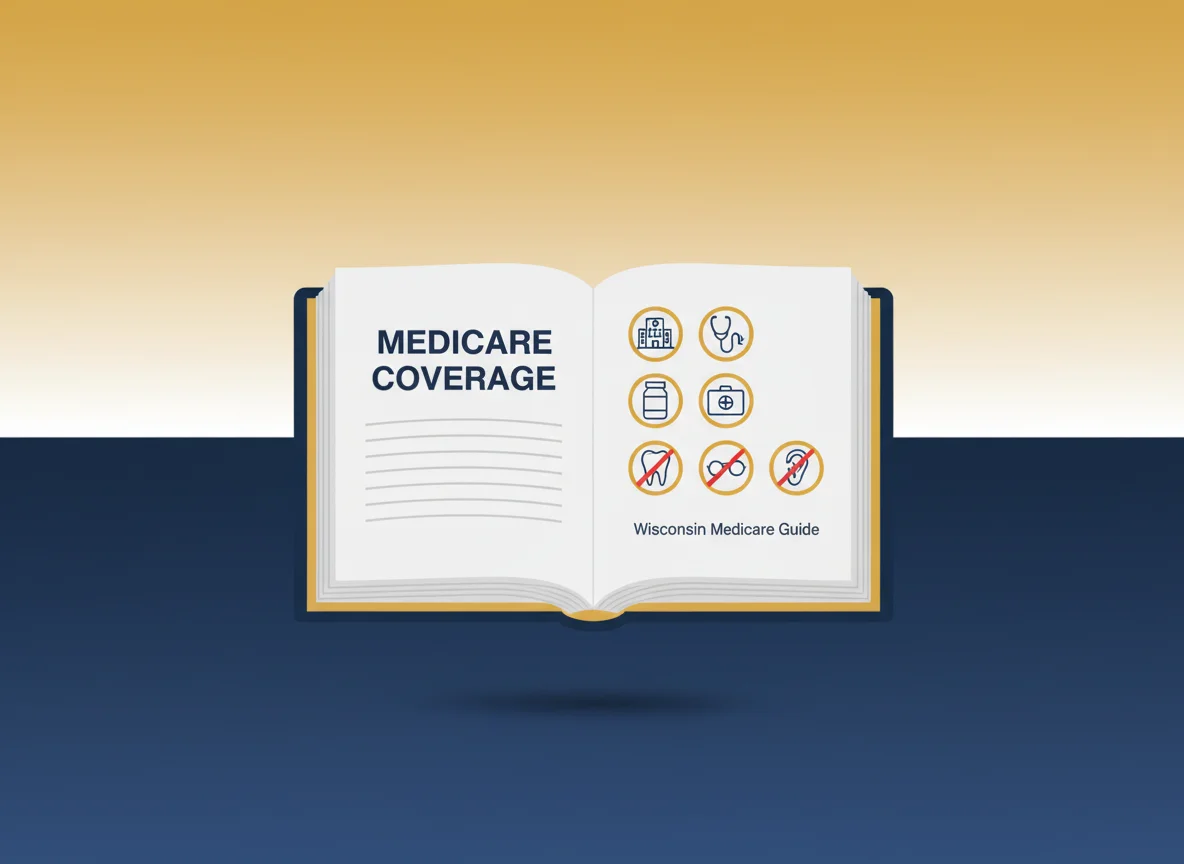
What Medicare Does NOT Cover (Common Gaps)
This is where many people get surprised. Understanding what Medicare generally does
not cover can help you plan ahead.
Most routine dental care
Routine dental services (like cleanings, fillings, and dentures) are generally not covered
by Original Medicare.
Routine vision exams and eyewear
Routine eye exams for glasses/contacts and most eyewear are generally not covered by
Original Medicare.
Routine hearing exams and hearing aids
Hearing aids and routine hearing exams are generally not covered by Original
Medicare.
Long-term care (custodial care)
Medicare generally does not cover long-term custodial care (help with bathing,
dressing, eating) when that is the only care you need.
Most care outside the U.S.
Original Medicare generally does not cover routine care outside the United States, with
limited exceptions.
Over-the-counter items and non-medically necessary services
Many over-the-counter products and services that are not medically necessary are not
covered.
Costs and Limits: Why “Covered” Doesn’t Always
Mean “Free”
Even when Medicare covers a service, you may still pay some costs.
Premiums, deductibles, and coinsurance (general overview)
Medicare cost-sharing can include: – Monthly premiums (for Part B and sometimes Part
- D) – Deductibles – Coinsurance or copayments
No annual out-of-pocket maximum in Original Medicare
Original Medicare does not have an annual out-of-pocket maximum. That means there
isn’t a built-in cap on what you could pay in a year for covered services.
Why this matters for planning
Knowing your potential exposure can help you think through budgeting and risk
management—especially if you have frequent care needs.
Wisconsin-Specific Notes That Can Affect Medicare
Decisions
Medicare is federal, but your experience can still vary by state due to local provider
systems, cost of care, and available plan options.
Provider access and local healthcare systems
In Wisconsin, access may vary by county and by provider group.
Understanding Medigap in Wisconsin (high-level)
Wisconsin is one of the states with unique Medigap standardization rules. If you’re
exploring supplemental coverage, it’s helpful to understand that Wisconsin’s Medigap
structure can differ from many other states.
Educational note: Specific plan details and eligibility should be confirmed with official
resources and a licensed professional.
Real-Life Examples (Educational Scenarios)
These examples are simplified and meant to help you understand how coverage
categories work.
Example 1: A hospital stay vs. observation status
Two people can be in the same hospital building but billed differently depending on
whether they are admitted as an inpatient or under observation. Coverage and
cost-sharing can differ.
Example 2: Physical therapy after surgery
Outpatient therapy may fall under Part B rules, and medical necessity and
documentation can matter.
Example 3: A prescription that isn’t on a plan’s formulary
If a medication is not covered or has restrictions, you may need to explore alternatives
or request an exception (depending on plan rules).
A Simple Checklist: Questions to Ask Before You

Choose Coverage
Use this checklist to stay organized as you learn.
Coverage questions
– What services do I use most (primary care, specialists, prescriptions, therapy)?
– Do I travel often or spend time outside Wisconsin?
– Do I prefer predictable costs or flexibility in provider choice?
Provider and medication questions
– Are my doctors and hospitals in-network (if applicable)?
– Are my prescriptions covered (if applicable)?
Budget and risk questions
– What is my monthly budget for healthcare?
– How would I handle a high-cost year?
Key Takeaways
– Medicare coverage is divided into Parts A, B, C, and D, each covering different
categories of care.
– Original Medicare generally covers many medically necessary services, but it does
not cover everything.
– Common gaps include routine dental, vision, hearing aids, and long-term custodial
care.
– “Covered” services can still involve cost-sharing, and Original Medicare has no
annual out-of-pocket maximum.
– Wisconsin has unique Medigap standardization rules, so state context matters when
researching supplemental coverage.
FAQ Section
Does Medicare cover dental?
Original Medicare generally does not cover routine dental care. Some limited
dental-related services may be covered when medically necessary as part of another
covered service.
Does Medicare cover vision?
Original Medicare generally does not cover routine vision exams for glasses or contacts.
Some medically necessary eye care may be covered.
Does Medicare cover hearing aids?
Original Medicare generally does not cover hearing aids or routine hearing exams.
Does Medicare cover long-term care?
Medicare generally does not cover long-term custodial care when that is the only care
you need. It may cover limited skilled care in specific situations when criteria are met.
Does Medicare cover prescriptions?
Original Medicare (Parts A and B) covers some drugs in specific settings, but outpatient
prescriptions are typically covered through Part D or other coverage.
Is Medicare the same in every state?
Medicare is federal, but plan availability, provider networks (if applicable), and
supplemental coverage structures can vary by state.
CMS Disclaimer
This content is for educational purposes only and does not constitute plan advice.
Coverage and eligibility may vary by individual situation.